
Join us for an evening exploring how advanced materials, spanning biotech, engineered systems and next-generation manufacturing, are enabling new industrial capabilities and bespoke solutions across sectors.
This Venture Café Connect Cambridge session moves beyond the well-trodden climate narrative to examine how materials science underpins industrial transformation, scale-up and global competitiveness across textiles, packaging, healthcare, construction and advanced production.


Innovation Jenga offers a fun, networking-focused twist on the classic game, with prompts designed to spark conversation, collaboration, and creative thinking.
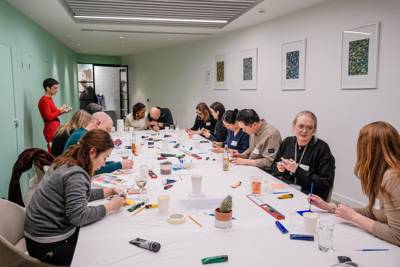
Drop in, pick up a brick and build something together.
Throughout the evening, we'll be running a collaborative Lego city-building workshop with a twist, each Lego brick represents a different material, from bio-based polymers to advanced composites. As you build, you're not just constructing a city, you're exploring how the materials of tomorrow might shape the world around us.
There's no agenda, no instructions and no wrong answers. Just creativity, conversation and a hands-on way to engage with the evening's theme. Whether you're an expert in materials science or simply curious, pull up a seat and add your piece to the picture.

Discover the innovators redefining what’s possible with matter itself. Throughout the evening, explore a curated showcase of pioneering startups developing next-generation materials across industries. Expect to hear from:
🌿Xampla
Xampla is a materials innovation company harnessing the power of natural plant proteins to create a new generation of sustainable, plastic-free materials. Rooted in over 15 years of research at the University of Cambridge, the company develops fully biodegradable, home-compostable alternatives to single-use plastics, spanning barrier coatings, soluble films, edible films and microencapsulation solutions. Through its Morro™ materials platform, Xampla is working with global brands across food and beverage, personal care and packaging to make plastic a material of the past.
✨Sparxell
Sparxell is a materials innovation company developing sustainable, high-performance colour solutions inspired by nature. By harnessing structural colour technology, Sparxell creates biodegradable pigments and coatings that eliminate the need for traditional synthetic dyes and harmful chemicals. Its technology offers scalable, environmentally responsible alternatives for applications across cosmetics, textiles, and advanced materials for paint, packaging and coatings.
⚡DZP Technologies
DZP Technologies Ltd is a materials innovation company developing advanced functional materials for next-generation electronic and flexible device applications. Focused on bridging cutting-edge research with scalable industrial solutions, the company works to improve performance, flexibility and manufacturability across emerging technologies.
🌊Notpla
Notpla is a materials innovation company harnessing the power of seaweed and plants to create a new generation of sustainable, plastic-free packaging. The company develops fully biodegradable, home-compostable alternatives to single-use plastics, spanning edible liquid capsules, barrier coatings for food containers, flexible films and seaweed-based paper. An Earthshot Prize winner, Notpla is working with global partners across foodservice, sport and e-commerce to make plastic packaging a thing of the past.
🥔Fibe
A London-based startup transforming the world's most abundant agricultural waste streams (like potatoes!) into sustainable textile fibres. By converting agricultural by-products into next-generation materials, Fibe is developing alternatives to conventional textiles designed to reduce environmental impact and support a more circular fashion supply chain.
Whether you're an investor, industry professional, researcher, or simply curious about cutting-edge innovation, this showcase offers a unique opportunity to experience the future of materials and connect with the minds building it.
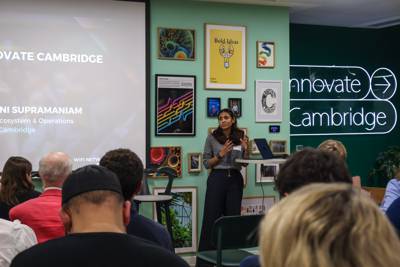

This panel will explore the evolving materials innovation ecosystem and its role in shaping the future of advanced manufacturing. Bringing together leaders from research, scale-up and funding, the discussion will examine where materials innovation is accelerating, the infrastructure and capital challenges of scaling production, and how breakthroughs translate into industrial capability.
Looking ahead, the conversation will focus on what the UK must build to compete globally in advanced production, identifying the system-level shifts required to strengthen Cambridge’s position as a leader in materials and manufacturing innovation.








Join us for an evening exploring how advanced materials, spanning biotech, engineered systems and next-generation manufacturing, are enabling new industrial capabilities and bespoke solutions across sectors.
This Venture Café Connect Cambridge session moves beyond the well-trodden climate narrative to examine how materials science underpins industrial transformation, scale-up and global competitiveness across textiles, packaging, healthcare, construction and advanced production.
Innovation Jenga offers a fun, networking-focused twist on the classic game, with prompts designed to spark conversation, collaboration, and creative thinking.
Drop in, pick up a brick and build something together.
Throughout the evening, we'll be running a collaborative Lego city-building workshop with a twist, each Lego brick represents a different material, from bio-based polymers to advanced composites. As you build, you're not just constructing a city, you're exploring how the materials of tomorrow might shape the world around us.
There's no agenda, no instructions and no wrong answers. Just creativity, conversation and a hands-on way to engage with the evening's theme. Whether you're an expert in materials science or simply curious, pull up a seat and add your piece to the picture.
Discover the innovators redefining what’s possible with matter itself. Throughout the evening, explore a curated showcase of pioneering startups developing next-generation materials across industries. Expect to hear from:
🌿Xampla
Xampla is a materials innovation company harnessing the power of natural plant proteins to create a new generation of sustainable, plastic-free materials. Rooted in over 15 years of research at the University of Cambridge, the company develops fully biodegradable, home-compostable alternatives to single-use plastics, spanning barrier coatings, soluble films, edible films and microencapsulation solutions. Through its Morro™ materials platform, Xampla is working with global brands across food and beverage, personal care and packaging to make plastic a material of the past.
✨Sparxell
Sparxell is a materials innovation company developing sustainable, high-performance colour solutions inspired by nature. By harnessing structural colour technology, Sparxell creates biodegradable pigments and coatings that eliminate the need for traditional synthetic dyes and harmful chemicals. Its technology offers scalable, environmentally responsible alternatives for applications across cosmetics, textiles, and advanced materials for paint, packaging and coatings.
⚡DZP Technologies
DZP Technologies Ltd is a materials innovation company developing advanced functional materials for next-generation electronic and flexible device applications. Focused on bridging cutting-edge research with scalable industrial solutions, the company works to improve performance, flexibility and manufacturability across emerging technologies.
🌊Notpla
Notpla is a materials innovation company harnessing the power of seaweed and plants to create a new generation of sustainable, plastic-free packaging. The company develops fully biodegradable, home-compostable alternatives to single-use plastics, spanning edible liquid capsules, barrier coatings for food containers, flexible films and seaweed-based paper. An Earthshot Prize winner, Notpla is working with global partners across foodservice, sport and e-commerce to make plastic packaging a thing of the past.
🥔Fibe
A London-based startup transforming the world's most abundant agricultural waste streams (like potatoes!) into sustainable textile fibres. By converting agricultural by-products into next-generation materials, Fibe is developing alternatives to conventional textiles designed to reduce environmental impact and support a more circular fashion supply chain.
Whether you're an investor, industry professional, researcher, or simply curious about cutting-edge innovation, this showcase offers a unique opportunity to experience the future of materials and connect with the minds building it.
This panel will explore the evolving materials innovation ecosystem and its role in shaping the future of advanced manufacturing. Bringing together leaders from research, scale-up and funding, the discussion will examine where materials innovation is accelerating, the infrastructure and capital challenges of scaling production, and how breakthroughs translate into industrial capability.
Looking ahead, the conversation will focus on what the UK must build to compete globally in advanced production, identifying the system-level shifts required to strengthen Cambridge’s position as a leader in materials and manufacturing innovation.